
Excerpt:
Stainless steel recycling supports circular economy strategies by conserving resources, reducing emissions, and ensuring sustainable supply for industrial applications.
Content
As of December 2025, stainless steel recycling has become a cornerstone of circular economy initiatives within the global steel industry. Manufacturers, distributors, and end users increasingly recognize the environmental and economic benefits of recycling, driving widespread adoption of closed-loop production systems.
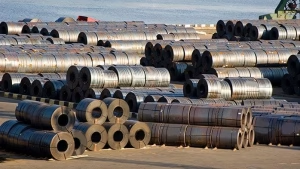
Stainless steel is uniquely suited for recycling due to its high material value and ability to retain mechanical and corrosion-resistant properties through multiple recycling cycles. Scrap stainless steel can be collected, melted, and reprocessed into new products without significant loss of performance, making it one of the most sustainable industrial materials available.
Recycling stainless steel significantly reduces energy consumption compared to producing steel from primary raw materials. Lower energy requirements translate into reduced greenhouse gas emissions, helping manufacturers meet international environmental regulations and corporate sustainability targets. These benefits are increasingly important as governments and industries commit to carbon reduction goals.
Modern recycling processes incorporate advanced sorting technologies, including magnetic separation and chemical analysis, to ensure material purity and consistency. High-quality recycled stainless steel is suitable for demanding applications such as automotive components, industrial machinery, construction elements, and energy systems.
Industries such as automotive manufacturing and heavy machinery increasingly prioritize recycled stainless steel in their supply chains. Using recycled materials helps companies demonstrate environmental responsibility while maintaining compliance with technical standards and performance requirements.
From a business perspective, stainless steel recycling improves supply chain resilience. By reducing dependence on virgin raw materials, manufacturers can mitigate price volatility and supply disruptions. This stability supports long-term planning and strengthens relationships between suppliers and customers.
Looking ahead, industry experts expect stainless steel recycling rates to continue rising as technology improves and regulatory pressure increases. Companies investing in efficient recycling infrastructure and transparent sustainability reporting are likely to gain competitive advantages and enhanced market trust.
In conclusion, stainless steel recycling plays a critical role in advancing circular economy initiatives. By conserving resources, reducing emissions, and supporting sustainable supply chains, recycled stainless steel contributes to a more resilient and environmentally responsible global steel industry.